

Vancouver "Compassion Club" Founders Challenge Constitutionality of Drug Laws After Darkweb Plan
The Case
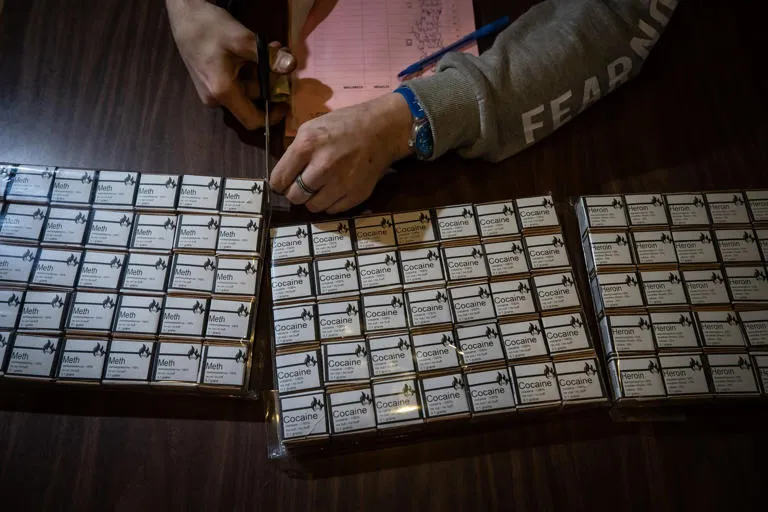
The founders of a Vancouver-based "compassion club," Jeremy Kalicum and Eris Nyx, are set to begin a constitutional challenge in the British Columbia Supreme Court. They were found guilty of drug trafficking earlier this month for possessing cocaine, heroin, and methamphetamine with the intention of trafficking.
The Organization's Goals and Actions
DULF (Drug Users Liberation Front) operated a "compassion club" between August 2022 and October 2023. The organization's goal was to provide safe and tested drugs to users in an effort to reduce overdose deaths. In 2021, DULF approached Health Canada asking for permission to buy heroin, cocaine, and methamphetamine on the dark web, have the drugs tested for contaminants, and sell them to users through its "compassion club and fulfilment centre." However, Health Canada rejected the application, citing too many public health and safety risks.
The Constitutional Challenge
DULF's constitutional challenge aims to prove that a section of the Controlled Drugs and Substances Act, which prohibits possession of drugs for trafficking purposes, is unconstitutional. The organization argues that this law "is killing the very people it purports to protect" by forcing users to rely on unregulated and deadly street drugs, which "disproportionately endangers lives." DULF also plans to argue that the law perpetuates discrimination against people with disabilities, including those with substance-use disorders.
The Operation and Shutdown
Despite Health Canada's rejection, DULF went ahead with its plan, saying it would save lives. The unsanctioned operation triggered political criticism, particularly after it emerged that DULF had initially received $200,000 of public funding from the B.C. government. The operation was shut down on October 26, 2023, when officers conducted a raid and arrested Kalicum and Nyx, who were later charged with trafficking offences.
The Court's Previous Ruling
In her decision on November 7, Justice Catherine Murray noted that the issue at trial was whether drug law exemptions granted to DULF allowed them to possess the drugs with the intent to sell them. While acknowledging that DULF was founded in response to the toxic drug crisis with the goal of distributing safe drugs and curbing overdose deaths, Murray ruled that the exemption authorized Kalicum and Nyx to test the drugs, package and label them, and provide supervised consumption of those substances, but it did not extend to selling the tested drugs to members.
The Ongoing Crisis
The case comes as British Columbia continues to grapple with a toxic drug crisis. According to the latest statistics from the BC Coroners Service, 158 people in B.C. died from illicit drug overdoses in September, which equates to about 5.3 deaths per day.
Key Facts
- DULF's compassion club operated from August 2022 to October 2023.
- The organization was shut down after a raid and the arrest of its founders.
- The constitutional challenge aims to prove that a section of the Controlled Drugs and Substances Act is unconstitutional.
- The toxic drug crisis in British Columbia continues, with 158 people dying from illicit drug overdoses in September.
The Investigation and Prosecution
The case is being heard in the British Columbia Supreme Court. The outcome of the constitutional challenge is pending, with the court having decided to hold the conviction in abeyance pending the challenge.


Comments
1 commentsLeave a Comment